
#2 in Salalah
Al Mina
Proposal
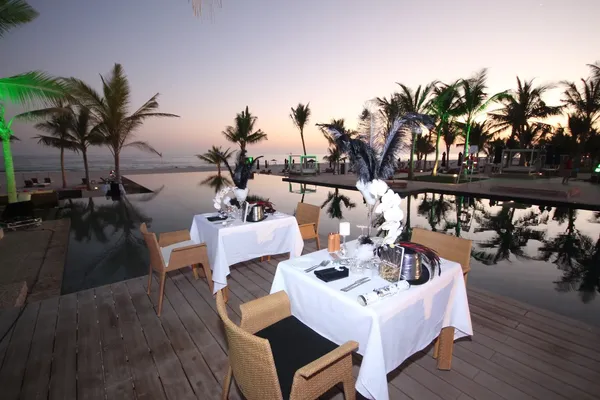
A beach terrace, a sunset, and an Italian-Greek-Spanish menu — Salalah's most romantic table.
Food 8.8
Ambience 9.5
Value 8.2
The definitive guide to Salalah's finest tables — ranked for every occasion, from first dates to deal-closing dinners.
Every table ranked, verdicts written, occasions assigned. Use the occasion filter above to narrow by your dining purpose.
$ under $40 · $$ $40–$80 · $$$ $80–$150 · $$$$ $150+ per person
Salalah is Oman's southern secret — a coastal city in the Dhofar governorate that receives the full force of the Indian Ocean monsoon from June to September, producing a landscape that greens suddenly and dramatically in a country the world associates only with desert. The frankincense trade made Dhofar one of the ancient world's wealthiest regions. The dining culture here carries that heritage: spiced, aromatic, generous, and built around the seafood of the Arabian Sea.
The Dhofar coast produces exceptional fish — Hammour, Kingfish, Barracuda, Samak — and the restaurants of Salalah know what to do with them. The international hotel circuit, led by Anantara's Al Baleed Resort, offers the most polished kitchens. But the authentic dining experience often happens in smaller establishments where the catch-of-the-day is genuinely that day's catch, cooked over charcoal and served with dried-lime rice in the southern Omani tradition.
Oman's dining culture is generous and relaxed. Alcohol is available at licensed hotel establishments; local restaurants are dry. Dress codes are modest but smart casual is accepted everywhere. Tipping is not customary but appreciated. The best seafood is often on the daily blackboard rather than the printed menu — always ask.
Salalah has benefited from Gulf tourism that has raised the standard of restaurant investment. The Anantara properties at Al Baleed are now among the finest hotel dining in the Arabian Peninsula outside the UAE. The Khareef Festival during monsoon season brings outdoor dinners on green hillsides — a seasonal event unlike anything in the region.
The frankincense souk, ten minutes from the dining district, is the right prelude or postlude to any dinner here. The smell of the city is part of the meal.
Explore more: dining by occasion • all cities • dining guides
Reservations in Salalah follow standard etiquette. The fine-dining picks above book 2-4 weeks ahead for weekend evenings; mid-tier neighbourhood restaurants accept 1-2 weeks; casual options often allow walk-ins if you arrive at 7pm or earlier. The peak season for Salalah dining mirrors the city's broader tourism rhythm — weekends and high-season holidays are tighter than mid-week and off-peak. Booking through the restaurant directly is faster than third-party platforms for the venues that maintain their own reservations.
Tipping in Salalah follows the local custom: 10-15% on the pre-tax total is standard, with 18-20% reserved for genuinely exceptional service. Many fine-dining venues now include a service charge automatically — check the bill before adding more. Card payment is universally accepted at the venues above; cash is welcomed but rarely required.
Salalah's dining scene operates year-round, but the best windows depend on your goals. Spring (March-May) and autumn (September-October) typically offer the best balance of weather, ingredient seasonality, and reservation availability. Summer brings tourist density at the harbour-side and central restaurants; the locals' favourite venues stay calmer in their own neighbourhoods. Winter is quieter but the heartier seasonal cooking — long-cooked meats, root vegetables, fortified wines — comes into its own.
The major calendar events to plan around: locally-relevant food festivals, a city restaurant week if Salalah runs one, and the international tourist holidays. The serious dining venues maintain their service quality across all seasons; the mid-tier options can dip during peak tourist periods when the staff is stretched thin.
Every dining city has a structural reason for its restaurant culture, and Salalah is no exception. The combination of local ingredient sourcing, the city's broader cultural orientation, the international cuisine integration, and the regulatory environment around food and beverage all shape what shows up on the plate. The restaurants we've ranked above are the ones that handle these structural elements with the most care — kitchens that know where their suppliers are, sommeliers who understand the regional wine context, and dining rooms calibrated to the city's actual pace rather than imported templates.
For visitors planning a single dining-driven trip to Salalah, our recommendation is to balance the splurge tier with the mid-tier neighbourhood discoveries that show what the city actually eats day-to-day. The casual options work for arrival nights, late-evening drinks, or the moments when the conversation matters more than the cuisine.
RFK Newsletter
We email you when a table worth booking opens in Salalah — reviewed by our editors, never paid placements.